One-Pot Vegetable Pulao with Whole Spices
Fluffy, separate grains of basmati rice cooked in one pot with whole spices, ghee and plenty of vegetables. Fragrant, mild and easy to make.
- Prep
- 10 min
- Cook
- 40 min
- Soaking
- 20 min
- Total
- 1 hr 10 min
- Makes
- 4 servings
- Difficulty
- Easy

In this article
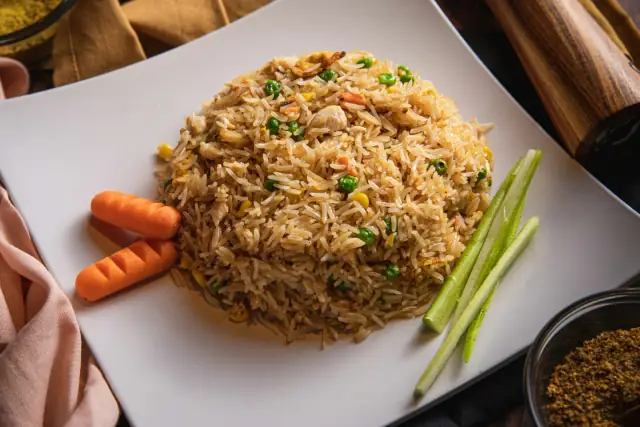
A good vegetable pulao is gentle, fragrant and fluffy, with every grain of basmati rice separate and lightly perfumed by whole spices. It is not as rich or layered as a biryani, which makes it an easy weeknight dish and a natural partner for curries, dal and yogurt.
This one-pot vegetable pulao starts by blooming cumin, cardamom, cloves, cinnamon and bay leaf in ghee, then builds flavor with golden onion, ginger and garlic before the rice and vegetables go in. Everything cooks together in the same pot, so there is no separate boiling or draining of rice and very little washing up.
Basmati rice, ghee, garam masala and whole cardamom are all easy to find in most US supermarkets, usually in the international aisle or the spice aisle. If you cannot find them, long-grain white rice, butter with a little oil, and a pinch of ground cumin and cinnamon make workable stand-ins; the substitutions section below has details.
If you enjoy rice dishes that use up a mix of vegetables, you may also like our easy vegetable fried rice, which takes things in a quicker, wok-style direction.
Vegetable pulao at a glance
- Taste and texture: mild, aromatic and lightly savory, with fluffy long grains and tender-crisp vegetables.
- Best for: weeknight dinners, packed lunches and serving alongside curries or dal.
- Key technique: rinse and soak the basmati, bloom the whole spices in ghee, then steam the rice undisturbed.
- Heat level: mild; the single green chile is optional.
Why this one-pot pulao works
Rinsing and soaking the basmati
Rinsing washes away loose surface starch, which is what makes rice clump and turn sticky. A 20-minute soak lets the grains absorb some water before they hit the heat, so they cook through evenly and lengthen rather than break. It also means the rice needs a little less cooking water.
Blooming whole spices in ghee
Whole spices release their aromatic oils into hot fat. Cumin, cardamom, cloves, cinnamon and bay leaf flavor the ghee, and that ghee then coats every grain of rice. The result is a pulao that tastes fragrant throughout, rather than spiced only in patches. Ghee adds a nutty richness, though oil works too.
The right ratio of water to rice
For soaked basmati, about 1 2/3 parts water to 1 part rice gives fluffy, separate grains. The vegetables also release some moisture as they cook, so this recipe uses 2 1/2 cups water for 1 1/2 cups rice. Too much water is the most common reason pulao turns mushy.
Low heat and a resting period
Once the pot boils, the heat drops to the lowest setting and the lid stays on. The rice cooks in trapped steam, and the final 10-minute rest off the heat lets the moisture spread evenly, so the top grains are as tender as the bottom ones.
One-Pot Vegetable Pulao
Equipment
- Heavy-bottomed pot or Dutch oven with a tight-fitting lid (about 4 quarts / 4 liters)
- Fine-mesh strainer
- Wooden spoon or spatula
Ingredients
Rice
- 1 1/2 cups basmati rice about 285 g; found in the rice or international aisle
- 2 1/2 cups water 600 ml, for cooking (plus extra for rinsing and soaking)
- 1 1/4 tsp fine salt adjust to taste
Whole spices and aromatics
- 2 tbsp ghee sold in jars in the international aisle or near the butter; or use unsalted butter plus 1 tsp oil, or neutral oil
- 1 tsp cumin seeds
- 1 bay leaf
- 4 green cardamom pods lightly cracked; spice or international aisle (or a pinch of ground cardamom added with the water)
- 4 whole cloves
- 1 inch cinnamon stick 2.5 cm piece
- 1 medium onion thinly sliced
- 1 tsp fresh ginger finely grated
- 2 cloves garlic minced
- 1 green chile serrano or jalapeño, slit lengthwise; optional
Vegetables and finish
- 1 medium carrot diced small, about 1/2 cup
- 1/2 cup green beans cut into 1/2 inch / 1 cm pieces
- 1/2 cup small cauliflower florets
- 1/2 cup green peas fresh or frozen; no need to thaw
- 1/4 tsp garam masala optional; international aisle, or a pinch each of ground cumin and cinnamon
- 2 tbsp fresh cilantro chopped
Instructions
- Rinse the basmati rice in a bowl of cold water, swirling gently with your fingers and draining, 3 to 4 times until the water runs mostly clear. Cover with fresh water and soak for 20 minutes. Chop the vegetables while it soaks, then drain the rice well in a strainer.
- Heat the ghee in a heavy-bottomed pot over medium heat. Add the cumin seeds, bay leaf, cardamom, cloves and cinnamon stick and stir for 30 to 45 seconds, until the cumin sizzles and the spices smell fragrant.
- Add the sliced onion and cook, stirring often, for 5 to 6 minutes until soft and light golden at the edges.
- Stir in the ginger, garlic and green chile, if using, and cook for 1 minute until the raw smell disappears.
- Add the carrot, green beans, cauliflower and peas. Stir for 2 to 3 minutes so the vegetables are coated in the spiced ghee.
- Add the drained rice and stir very gently for 1 to 2 minutes, turning the grains over without breaking them, until they look slightly translucent at the edges.
- Pour in the 2 1/2 cups water, then add the salt and garam masala, if using. Stir once, taste the water (it should taste pleasantly salty) and bring to a full boil over high heat, about 3 to 4 minutes.
- As soon as it boils, reduce the heat to the lowest setting, cover tightly and cook for 12 to 15 minutes without lifting the lid, until the water is absorbed and small steam holes appear on the surface.
- Turn off the heat and leave the pot covered for 10 minutes so the rice finishes steaming.
- Remove the lid, fluff the rice gently with a fork, and pick out the bay leaf and cinnamon stick if you like. Scatter over the cilantro and serve hot.
Notes
Tips for fluffy vegetable pulao
- Use a heavy pot with a tight lid. A thin pot can scorch the bottom before the top is cooked. If your lid is loose, lay a sheet of foil over the pot before putting the lid on.
- Cut the vegetables small and evenly. Pieces about the size of a pea or a little larger cook in the same time as the rice.
- Stir gently, then stop. Soaked basmati is fragile. Fold it gently when you add it, stir once after adding the water, and then leave it alone.
- Taste the cooking water. It should taste pleasantly salty, a bit saltier than you would want the finished dish, because the rice absorbs it.
- Fluff with a fork. A spoon can mash the grains. Lift and separate them with a fork instead.
- Warn diners about whole spices. Cloves and cardamom pods are not pleasant to bite into, so either remove them before serving or let everyone know they are there.
Substitutions and variations
- No ghee: unsalted butter with a teaspoon of oil (to keep it from browning too fast) gives a similar richness.
- No garam masala: leave it out, or add a pinch each of ground cumin and ground cinnamon; the whole spices already carry most of the aroma.
- Vegan pulao: replace the ghee with a neutral oil such as sunflower or canola. Everything else in the recipe is already plant-based.
- Vegetables: swap in diced potato, corn, bell pepper or chopped spinach (stir spinach in just before covering the pot). Keep the total amount of vegetables about the same.
- Brown basmati: it needs more water and much longer cooking, roughly 2 3/4 cups water and 35 to 40 minutes. Check the package and expect a chewier texture.
- Other rice: long-grain white rice works, though it will not be as fragrant or as long. Short-grain and sticky rice are not suitable here.
- Extra protein: add a drained can of chickpeas with the vegetables, or stir in cubes of lightly fried paneer before serving.
- Richer finish: top with fried onions, toasted cashews or a few raisins warmed in a little ghee.
Storage and reheating
Cooked rice needs a little extra care. Spread leftovers in a shallow container so they cool quickly, and refrigerate at 40°F / 4°C or below within 2 hours of cooking. Eat within 1 day.
To reheat, sprinkle the pulao with a tablespoon or two of water, cover and microwave until steaming hot all the way through, stirring halfway. You can also reheat it in a covered pan over low heat with a splash of water. Reheat to 165°F / 74°C, and reheat only once. Pulao can be frozen in airtight containers for up to 1 month; thaw it in the fridge overnight and reheat until piping hot.
Common mistakes to avoid
- Skipping the rinse. Unrinsed rice releases extra starch and turns gluey. Rinse until the water runs mostly clear.
- Adding too much water. This leads to mushy, broken grains. Measure carefully, and remember that soaked rice needs less water than dry rice.
- Lifting the lid during cooking. Every peek lets steam escape and can leave the top layer undercooked. Trust the timer and the 10-minute rest.
- Burning the whole spices. They need only 30 to 45 seconds. If the cumin turns dark brown or smells bitter, start again with fresh ghee and spices.
- Stirring too much. Vigorous stirring breaks the delicate grains. Stir gently and only when the recipe says to.
Frequently asked questions
What is the difference between pulao and biryani?
Pulao cooks rice and vegetables together in one pot with a measured amount of water, and is usually lightly spiced. Biryani typically layers partly cooked rice with a separately cooked, more heavily spiced gravy, and it is richer and more involved to make.
Can I make vegetable pulao in a pressure cooker?
Yes. Follow the same steps up to adding the water, but reduce it to about 2 1/4 cups for soaked rice. Cook for 1 whistle (or about 4 minutes at high pressure in an electric cooker), then let the pressure release naturally before opening.
Why is my pulao sticky?
Sticky pulao usually comes from not rinsing the rice enough, using too much water or stirring after it starts to cook. Rinse well, measure the water and leave the lid on until the rest is over.
Do I have to soak basmati rice?
It is not essential, but it helps the grains cook evenly and grow longer. If you skip it, add about 1/4 cup extra water and allow a few more minutes of cooking.
Can I double this recipe?
Yes, as long as your pot is wide enough for the rice to sit in a fairly even layer. Use a little less than double the water, about 4 3/4 cups, since less evaporates in a larger batch, and allow a few extra minutes for it to come to a boil.
Serving suggestions
Vegetable pulao is lovely with a bowl of plain yogurt or cucumber raita and a crisp onion salad on the side. For a heartier meal, serve it with our easy homemade chicken curry, or keep the table vegetarian with a colorful vegetable stir-fry with garlic sauce. Leftovers pack well for lunch, and if you like slow-cooked rice dishes you might also enjoy our creamy mushroom risotto. Find more meat-free ideas in our vegetarian recipes.