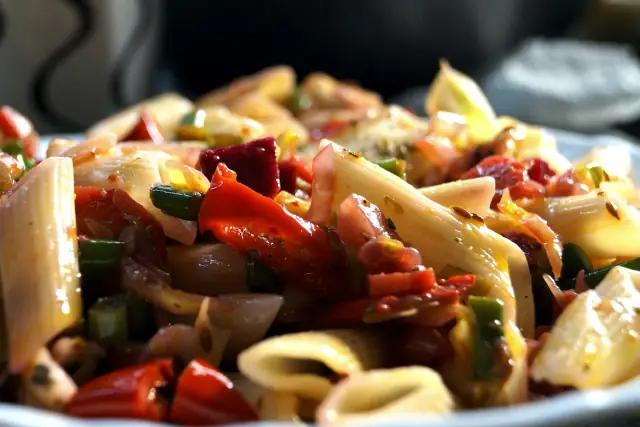
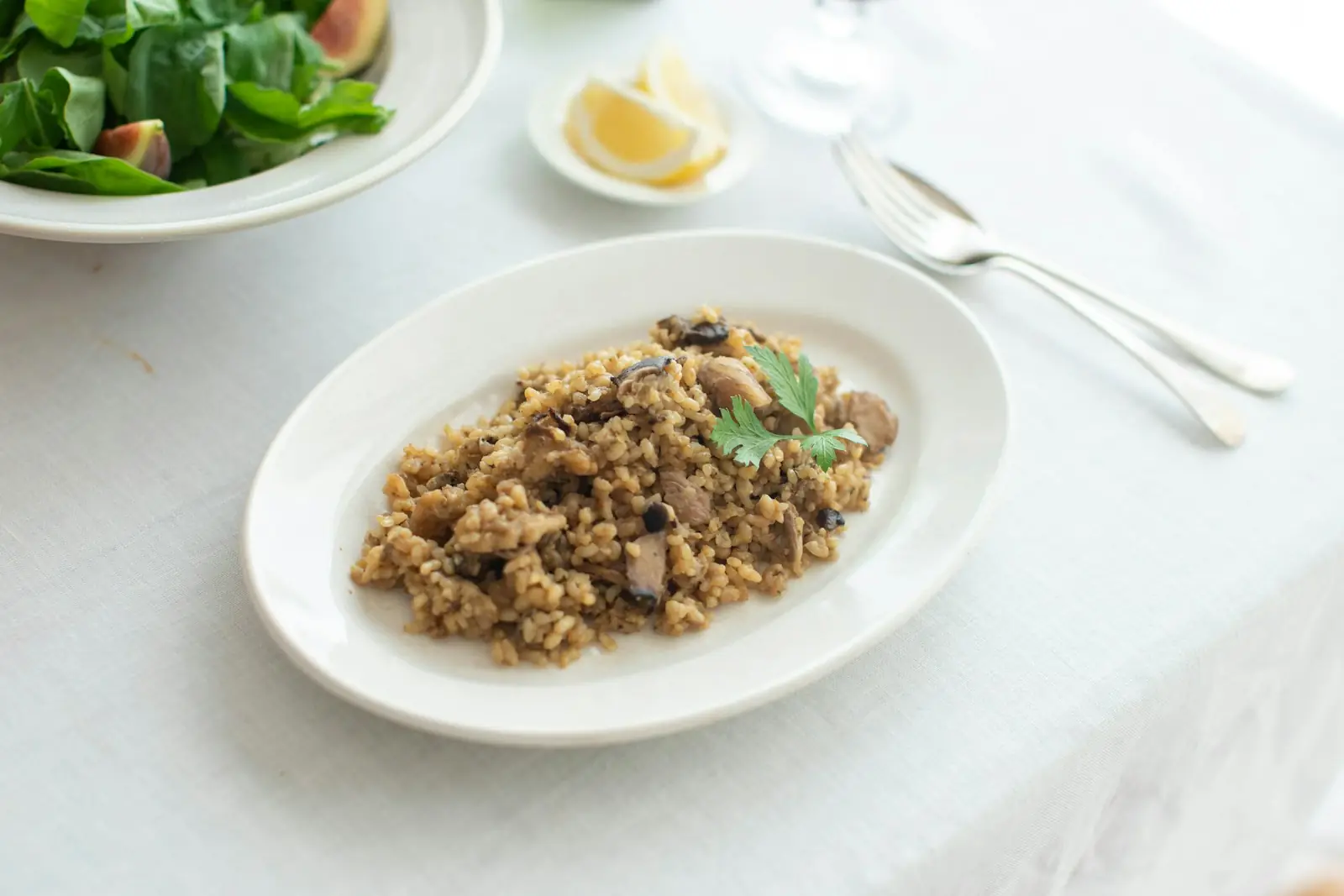
Creamy Mushroom Risotto
Silky, savory risotto made with deeply browned cremini mushrooms, a splash of white wine and fresh thyme, finished with butter and vegetarian hard cheese.
- Prep
- 15 min
- Cook
- 40 min
- Total
- 55 min
- Makes
- 4 servings
- Difficulty
- Medium
In this article
A good mushroom risotto is creamy without any cream, rich without being heavy and full of savory, earthy flavor. The secret is not a special ingredient but a little attention: browning the mushrooms properly, toasting the rice, and adding hot broth a ladle at a time so the rice releases its starch and turns silky.
This version uses cremini mushrooms, which are sold everywhere and have more flavor than white button mushrooms. A splash of dry white wine adds brightness, fresh thyme brings an herbal note, and a final stir of butter and grated cheese gives it the classic glossy finish.
One important detail for vegetarians: traditional Parmesan, sold as Parmigiano-Reggiano, is made with animal rennet, so it is not vegetarian. This recipe calls for a vegetarian Parmesan-style hard cheese instead, and the section on substitutions below explains what to look for. If you enjoy cozy, creamy dinners, our creamy garlic butter pasta is another easy favorite.
Mushroom risotto at a glance
- Taste and texture: savory and earthy, with tender-but-firm grains in a creamy, flowing sauce and golden, meaty mushrooms.
- Best for: a comforting weeknight dinner, a vegetarian main for guests, or a date-night meal.
- Key technique: adding hot broth gradually while stirring, so the rice releases starch and creates its own creamy sauce.
- Diet: vegetarian when made with rennet-free cheese and vegetable broth; naturally gluten-free.
Why this mushroom risotto works
Mushrooms browned separately
Mushrooms are full of water. If they go into the pot with the rice, they simmer and turn gray and rubbery. Cooking them first in a hot pan, without stirring at the start, drives off the moisture and gives them golden edges and a much deeper flavor. Stirring them back in at the end keeps their texture.
Arborio rice and its starch
Arborio is a short-grain Italian rice that is easy to find in most US supermarkets, usually in the rice or international aisle. Its grains are coated in starch that dissolves into the broth as you stir, thickening it into a creamy sauce while the center of each grain stays slightly firm. That is why you should never rinse risotto rice.
Hot broth, added gradually
Keeping the broth hot means each addition does not stop the cooking. Adding it in small amounts and stirring often rubs starch off the grains and lets you control the final texture precisely, so you can stop when the rice is just right.
The finish: butter and cheese off the heat
Beating in cold butter and finely grated cheese off the heat, a step Italian cooks call mantecatura, makes the risotto glossy and rich. Doing it off the heat keeps the cheese smooth instead of stringy.
Creamy Mushroom Risotto
Equipment
- Large, wide heavy skillet or Dutch oven (at least 12 inches)
- Medium saucepan
- Ladle
- Wooden spoon
- Fine grater
Ingredients
- 6 cups low-sodium vegetable broth 1.4 L; you may not need all of it
- 2 tbsp olive oil 30 ml
- 1 lb cremini (baby bella) mushrooms 450 g, wiped clean and sliced
- 1 tsp kosher salt divided, plus more to taste
- 2 tsp fresh thyme leaves or 3/4 tsp dried thyme
- 3 tbsp unsalted butter divided
- 1 large shallot finely chopped, or 1/2 small yellow onion
- 2 cloves garlic minced
- 1 1/2 cups Arborio rice about 10 oz / 300 g; do not rinse
- 1/2 cup dry white wine 120 ml, such as Pinot Grigio or Sauvignon Blanc
- 3/4 cup finely grated vegetarian Parmesan-style hard cheese about 2 oz / 60 g, made with microbial or vegetable rennet, plus extra to serve
- 1/4 tsp black pepper freshly ground
- 2 tbsp fresh flat-leaf parsley chopped
Instructions
- Pour the vegetable broth into a medium saucepan and bring it to a bare simmer over medium heat. Turn the heat to low and keep it hot, covered, while you cook.
- Heat the olive oil in a large, wide heavy skillet over medium-high heat until shimmering. Add the mushrooms in an even layer and cook without stirring for 3 to 4 minutes, until browned underneath.
- Sprinkle the mushrooms with 1/2 teaspoon of the salt and keep cooking, stirring occasionally, for another 5 to 6 minutes, until the liquid they release has evaporated and they are golden all over. Stir in the thyme for the last 30 seconds, then transfer the mushrooms to a plate.
- Lower the heat to medium and add 1 tablespoon of the butter to the same pan. Add the shallot and cook, stirring, for 3 to 4 minutes, until soft and translucent. Add the garlic and cook for 30 seconds, until fragrant.
- Add the rice and stir for about 2 minutes, until the grains are coated in butter and the edges look translucent while the centers stay white.
- Pour in the wine and stir until it is almost completely absorbed, 1 to 2 minutes.
- Add about 1/2 cup of the hot broth and stir often until it is mostly absorbed and the spoon leaves a trail across the bottom of the pan. Keep adding broth 1/2 cup at a time, stirring frequently and waiting until each addition is mostly absorbed before adding the next. Adjust the heat to keep a gentle, steady simmer.
- After 18 to 22 minutes, start tasting the rice. It is ready when the grains are tender but still have a slight bite in the center and the risotto is creamy and loose. You will likely use 5 to 6 cups of broth.
- Stir in most of the mushrooms, saving a few for the top, along with the remaining 1/2 teaspoon salt and the pepper. Cook for 1 minute to warm them through.
- Remove the pan from the heat. Add the remaining 2 tablespoons butter and the grated cheese and stir vigorously for about 30 seconds, until glossy and creamy. Add a splash more hot broth if it seems stiff; it should slowly spread when spooned onto a plate.
- Cover and let rest for 2 minutes. Taste for salt, then spoon into warm bowls and top with the reserved mushrooms, parsley and extra cheese.
Notes
Tips for creamy risotto every time
- Use a wide pan. A wide skillet or Dutch oven gives the rice room to cook evenly and lets the broth reduce at a steady rate.
- Prep before you start. Once the rice is in, you need to stay close to the stove. Chop, measure and grate everything first.
- Stir often, not constantly. Stirring every 30 seconds or so is enough to keep the rice from sticking and to release starch. You do not need to stir without stopping.
- Taste from the 18-minute mark. Cooking times vary with the rice and pan. Taste a few grains every couple of minutes and stop when they are tender with a slight bite.
- Keep it loose. Risotto thickens as it sits. It should flow slowly across the plate when served, so finish it a little looser than you think.
- Grate the cheese finely. A microplane or the fine side of a box grater gives fluffy cheese that melts in seconds.
Substitutions and variations
- Vegetarian Parmesan alternatives: look for Italian-style hard cheeses labeled vegetarian or made with microbial or vegetable rennet. Several widely sold US brands of domestic Parmesan use microbial rennet; check the ingredient list, since “enzymes” alone does not say which kind. An aged white cheddar made with vegetarian rennet also works, though it tastes milder and less nutty.
- Dairy-free or vegan: use olive oil in place of the butter and stir in 2 to 3 tablespoons nutritional yeast or a plant-based Parmesan at the end for a savory, cheesy flavor. Some wines are clarified with animal-derived products, so choose one labeled vegan if that matters to you.
- No wine: replace it with an equal amount of broth plus 1 teaspoon fresh lemon juice or white wine vinegar for acidity.
- Other mushrooms: white button, shiitake (stems removed), oyster or a mix all work. For deeper flavor, soak 1/2 ounce (15 g) dried porcini in 1 cup hot water for 20 minutes, chop them and add with the shallot, and strain the soaking liquid into the broth.
- Other rice: Carnaroli makes an even creamier risotto if you can find it. Long-grain or basmati rice will not release enough starch, so avoid them here.
- Add greens: stir in two handfuls of baby spinach with the mushrooms and let it wilt.
Storage and reheating
Rice should not sit out for long, so cool leftovers quickly by spreading them in a shallow container and refrigerate within 2 hours of cooking, in a fridge at or below 40°F / 4°C. Eat within 3 days.
To reheat, put the risotto in a saucepan with a splash of broth or water over medium-low heat and stir until steaming hot all the way through, adding more liquid as needed to loosen it. It will not be quite as creamy as fresh but is still very good. The microwave works too: cover, add a splash of liquid and heat in short bursts, stirring in between.
Freezing is possible for up to 2 months, but the rice turns softer after thawing. Leftover risotto is also great shaped into small cakes and pan-fried until crisp on both sides.
Common mistakes to avoid
- Using cold broth. Cold broth slows the cooking every time you add it and leads to uneven, gluey rice. Keep it hot in a separate pan.
- Adding all the liquid at once. The rice simply boils, like regular rice, and never gets creamy. Add it gradually.
- Overcooking the rice. Mushy risotto has lost its bite. Start tasting early and stop as soon as the grains are tender with a slightly firm center.
- Crowding the mushrooms. Piled-up mushrooms steam instead of brown. Use a large pan, or brown them in two batches with half the oil each.
- Using pre-grated cheese in a can. It contains anti-caking agents and does not melt smoothly. Grate a wedge of vegetarian hard cheese yourself.
Frequently asked questions
Is mushroom risotto vegetarian?
Only if you choose the cheese and broth carefully. Parmigiano-Reggiano and Grana Padano are made with animal rennet, and some broths contain meat. Use vegetable broth and a hard cheese made with microbial or vegetable rennet.
Do you have to stir risotto constantly?
No. Frequent stirring, about every 30 seconds, is enough. It keeps the rice from catching on the bottom and helps release starch for a creamy texture.
Can I make mushroom risotto without wine?
Yes. Use the same amount of extra broth and add a teaspoon of lemon juice or white wine vinegar to replace the wine’s acidity.
Why is my risotto gluey or too thick?
It was probably overcooked or left to sit too long before serving. Stir in a little hot broth to loosen it, and next time take it off the heat while it is still slightly runny.
Can I make risotto ahead for a dinner party?
Partly. Cook it until the rice is about two-thirds done, around 12 minutes after the first broth goes in, then spread it on a sheet pan to cool quickly and refrigerate. When ready, return it to the pan with hot broth and finish cooking for 6 to 8 minutes before adding the mushrooms, butter and cheese.
What to serve with mushroom risotto
Risotto is rich, so something fresh and crisp on the side is ideal. A simple green salad with a lemony dressing works well, as does a bowl of fresh Mediterranean chickpea salad for extra crunch.
For a bigger vegetarian spread, start with small cups of creamy tomato soup, or serve the risotto next to a sheet pan of roasted vegetables. And if you are in the mood for another comforting one-pot rice dish, try our one-pot vegetable pulao.