Creamy Tomato Soup with Canned Tomatoes
A velvety, deeply flavored tomato soup built from pantry staples: canned tomatoes, a soft onion base, a little carrot for sweetness and a splash of cream.
- Prep
- 10 min
- Cook
- 40 min
- Total
- 50 min
- Makes
- 4 servings
- Difficulty
- Easy
In this article
A good bowl of creamy tomato soup should taste like tomatoes first and cream second. This version gets there with ordinary pantry ingredients: a can of whole peeled tomatoes, an onion and carrot cooked slowly in butter and olive oil, and just enough cream at the end to round off the edges without turning it into a sauce.
The method is simple and forgiving. You build a sweet, soft base, toast a spoonful of tomato paste for depth, simmer everything for twenty minutes and blend until silky. No roasting pan, no special equipment beyond a blender, and nothing that needs to be bought fresh except a few basil leaves.
It is a reliable weekday lunch, a gentle dinner on a cold evening and an easy soup to make ahead. If you are new to blended soups, our cooking tips page covers the basics of safe blending and seasoning as you go.
Creamy tomato soup at a glance
- Taste and texture: bright but mellow tomato flavor, naturally sweet from the onion and carrot, smooth and spoon-coating.
- Best for: quick lunches, make-ahead meals, dunking toast or wedges, feeding a small family.
- Key technique: slowly softening the aromatics, then caramelizing the tomato paste before the liquid goes in.
- Diet: vegetarian as written, with an easy dairy-free swap below.
Why this tomato soup tastes so rich
Whole canned tomatoes instead of fresh
Unless tomatoes are at their peak in late summer, a good can of whole peeled tomatoes will give you more consistent flavor than fresh ones from the supermarket. They are picked ripe and packed quickly, and whole tomatoes tend to taste cleaner than crushed or puréed varieties.
A carrot for natural sweetness
Canned tomatoes can be sharp. One chopped carrot, simmered until soft and blended in, softens that acidity without making the soup taste of carrot. It also adds body, so you need less cream to get a velvety finish. The teaspoon of sugar is optional and only there for particularly tart cans.
Toasting the tomato paste
Two minutes of stirring tomato paste in the hot pot before adding the liquid takes away its raw, metallic edge and builds a deeper, slightly savory flavor. Watch for the color shifting from bright red to brick red, and for a light film sticking to the pan. That film dissolves into the soup when you add the tomatoes.
Cream added last, off the boil
Cream goes in at the very end, over low heat. Boiling it with the acidic tomatoes can cause it to split, and adding it after blending gives you more control over how rich the soup ends up.
Creamy Tomato Soup
Equipment
- Large heavy pot or Dutch oven
- Immersion blender or countertop blender
- Wooden spoon
- Chef's knife and cutting board
Ingredients
- 2 tbsp olive oil 30 ml
- 1 tbsp unsalted butter 15 g
- 1 large yellow onion chopped, about 1 1/2 cups / 200 g
- 1 medium carrot peeled and chopped
- 3 cloves garlic sliced
- 1 tbsp tomato paste
- 1 can whole peeled tomatoes 28 oz / 794 g, with their juice
- 2 cups vegetable broth 480 ml
- 1 tsp granulated sugar optional, to balance acidity
- 1 tsp kosher salt plus more to taste
- 1/4 tsp black pepper freshly ground
- 1/4 cup fresh basil leaves loosely packed, plus extra to serve
- 1/2 cup heavy cream 120 ml, at room temperature
Instructions
- Heat the olive oil and butter in a large heavy pot over medium heat until the butter melts and stops foaming.
- Add the onion and carrot with a pinch of the salt. Cook, stirring now and then, for 8 to 10 minutes, until the onion is soft and translucent but not browned.
- Add the garlic and cook for 1 minute, until fragrant. Stir in the tomato paste and cook for 2 minutes, stirring, until it darkens slightly and starts to stick to the bottom of the pot.
- Pour in the canned tomatoes with their juice and crush them against the side of the pot with the spoon. Add the vegetable broth, sugar (if using), the rest of the salt and the pepper, scraping up anything stuck to the bottom.
- Bring to a boil, then lower the heat and simmer, partly covered, for 20 minutes, stirring occasionally, until the carrot is completely tender when pressed with the spoon.
- Take the pot off the heat and add the basil. Blend with an immersion blender until completely smooth. If using a countertop blender, let the soup cool for 5 minutes, fill the jar no more than half full, remove the center cap of the lid and cover the hole with a folded towel, then blend in batches and return to the pot.
- Set the pot over low heat and stir in the cream. Warm gently for 2 minutes without letting it boil. Taste and adjust with more salt or a pinch more sugar if it tastes sharp.
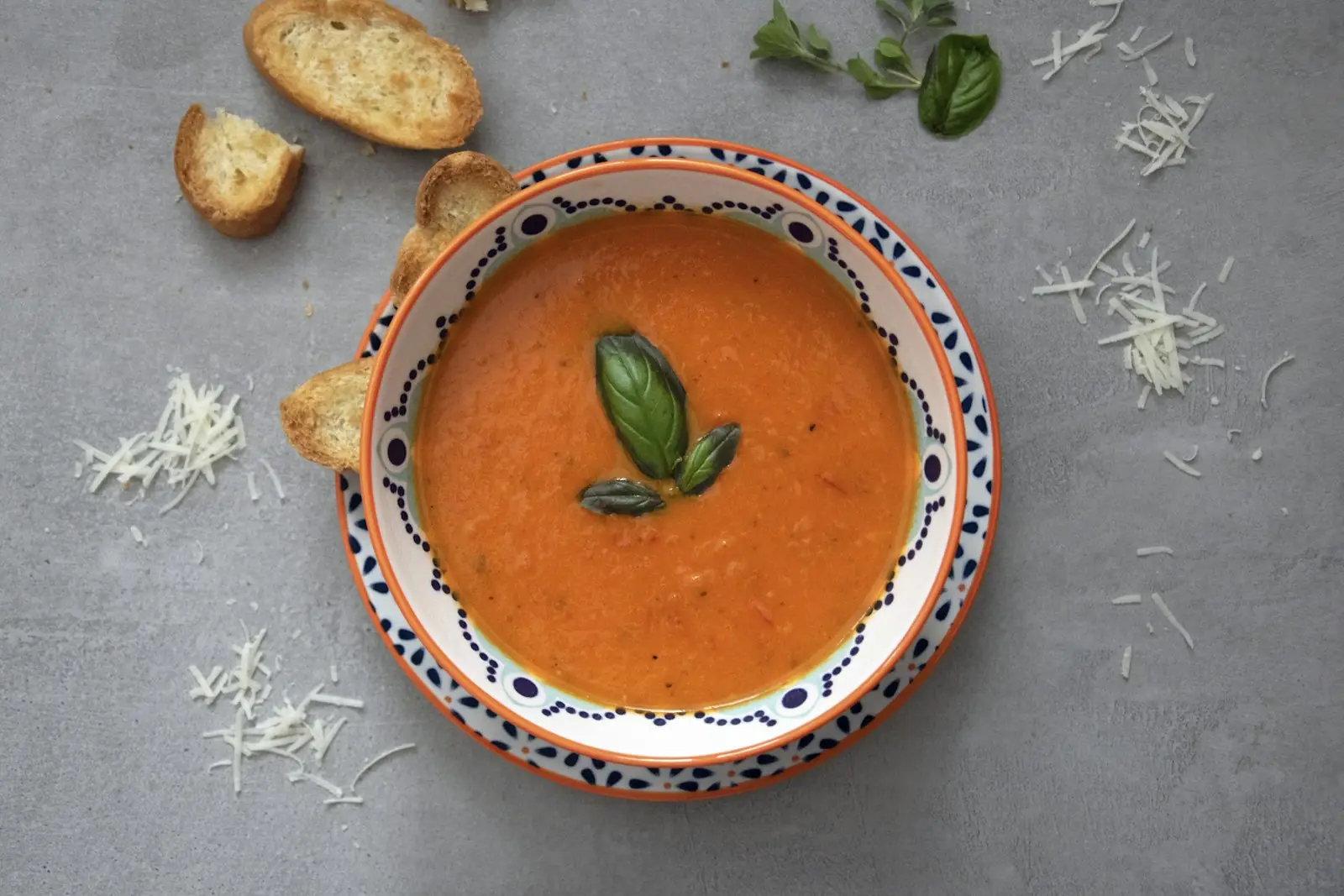
- Ladle into bowls and top with a little extra cream and torn basil.
Notes
Tips for the smoothest tomato soup
- Cut the vegetables small. Smaller pieces of onion and carrot soften faster and blend more smoothly.
- Do not rush the onions. Eight to ten minutes over medium heat makes them sweet. Browning is not needed and can make the soup taste bitter.
- Blend longer than you think. An immersion blender needs a full minute or two, moved around the pot, to get rid of every fleck of carrot.
- Bring the cream to room temperature. Cold cream poured into hot, acidic soup is more likely to curdle.
- Season at the end. Brands of broth and canned tomatoes vary a lot in salt, so taste once the cream is in and adjust then.
Substitutions and variations
- Dairy-free: use 2 tablespoons more olive oil in place of the butter and stir in full-fat canned coconut milk or an unsweetened oat cream instead of heavy cream. Coconut milk adds a faint coconut note.
- Lighter: swap the cream for whole milk, or leave it out and blend in a slice of crustless bread for body.
- Fresh tomatoes: in high summer, use about 2 1/2 pounds (1.1 kg) ripe tomatoes, cored and chopped, and simmer a little longer until they collapse.
- Roasted red pepper: add one jarred roasted red pepper with the tomatoes for a sweeter, smokier soup.
- Herbs: a pinch of dried oregano or thyme with the garlic works well if you do not have fresh basil.
- Heat: add a pinch of red pepper flakes with the garlic.
Storage and reheating
Let the soup cool and refrigerate it within 2 hours of cooking, in a fridge set at or below 40°F / 4°C. In an airtight container it keeps for up to 4 days in the fridge.
To freeze, cool completely and freeze in portions for up to 3 months. Soups with cream can look slightly grainy after freezing; a quick whisk or a few seconds with the blender brings them back. If you plan to freeze a whole batch, you can also freeze it before adding the cream and stir the cream in when reheating.
Reheat gently in a pot over medium-low heat, stirring often, until steaming hot all the way through. Avoid a hard boil, which can split the cream. Thin with a splash of broth or water if it has thickened in the fridge.
Common mistakes to avoid
- Blending a full jar of hot soup. Steam builds up and can blow the lid off. Fill the jar only halfway, vent the lid and cover it with a towel, or use an immersion blender.
- Boiling after the cream goes in. This is the most common cause of a curdled look. Keep the heat low and just warm it through.
- Undercooking the carrot. If it is not completely tender, it will leave tiny bits in the soup. Simmer until a piece crushes easily against the side of the pot.
- A sour, flat soup. This usually means it needs salt rather than more sugar. Add salt first, taste, then add sugar a pinch at a time only if it is still sharp.
Frequently asked questions
Can I make this tomato soup without a blender?
You can mash it with a potato masher for a rustic, chunky soup, but it will not be creamy-smooth. Chop the onion and carrot very finely so they almost dissolve during simmering.
Why did my tomato soup curdle?
The acid in tomatoes can cause dairy to separate, especially if the soup boils after the cream is added or the cream is very cold. Use room-temperature cream, add it over low heat and do not let it bubble. Heavy cream is more stable than milk or half-and-half.
Is this tomato soup vegetarian?
Yes, as long as you use vegetable broth. Some stock cubes and bouillon powders contain meat or chicken extracts, so check the label.
Can I use crushed tomatoes instead of whole?
Yes. Use the same 28-ounce (794 g) can. The soup may taste a little more cooked and slightly thicker, so add a splash of extra broth if needed.
How do I make the soup thicker or thinner?
For a thicker soup, simmer uncovered for an extra 5 to 10 minutes before blending. For a thinner one, stir in more broth after blending until it reaches the consistency you like.
What to serve with tomato soup
Tomato soup loves something crisp on the side. A plate of crispy oven-baked potato wedges is perfect for dipping, and a slice of easy avocado toast turns a bowl into a proper lunch. Grilled cheese sandwiches and crusty bread are classic for good reason.
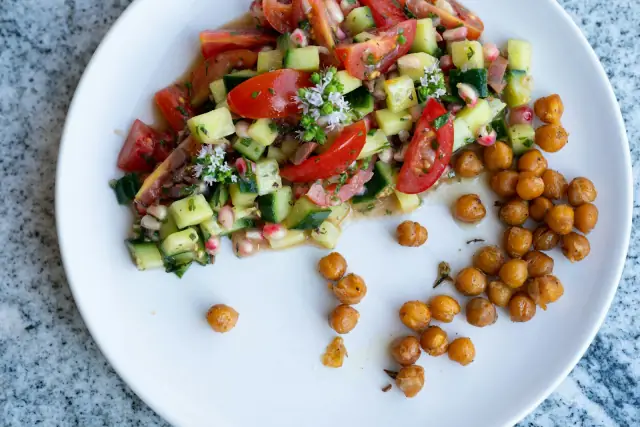
For something fresher alongside, a bowl of Mediterranean chickpea salad adds crunch and protein. And if you have extra basil and a few tomatoes left, a homemade Margherita pizza makes good use of them later in the week.