Classic Homemade Margherita Pizza with Easy Dough
A classic homemade Margherita pizza with an easy from-scratch dough, a no-cook tomato sauce, fresh mozzarella and basil, baked hot for a crisp, chewy crust.
- Prep
- 30 min
- Cook
- 24 min
- Dough rising
- 1 hr 30 min
- Total
- 2 hr 24 min
- Makes
- 4 servings
- Difficulty
- Medium
In this article
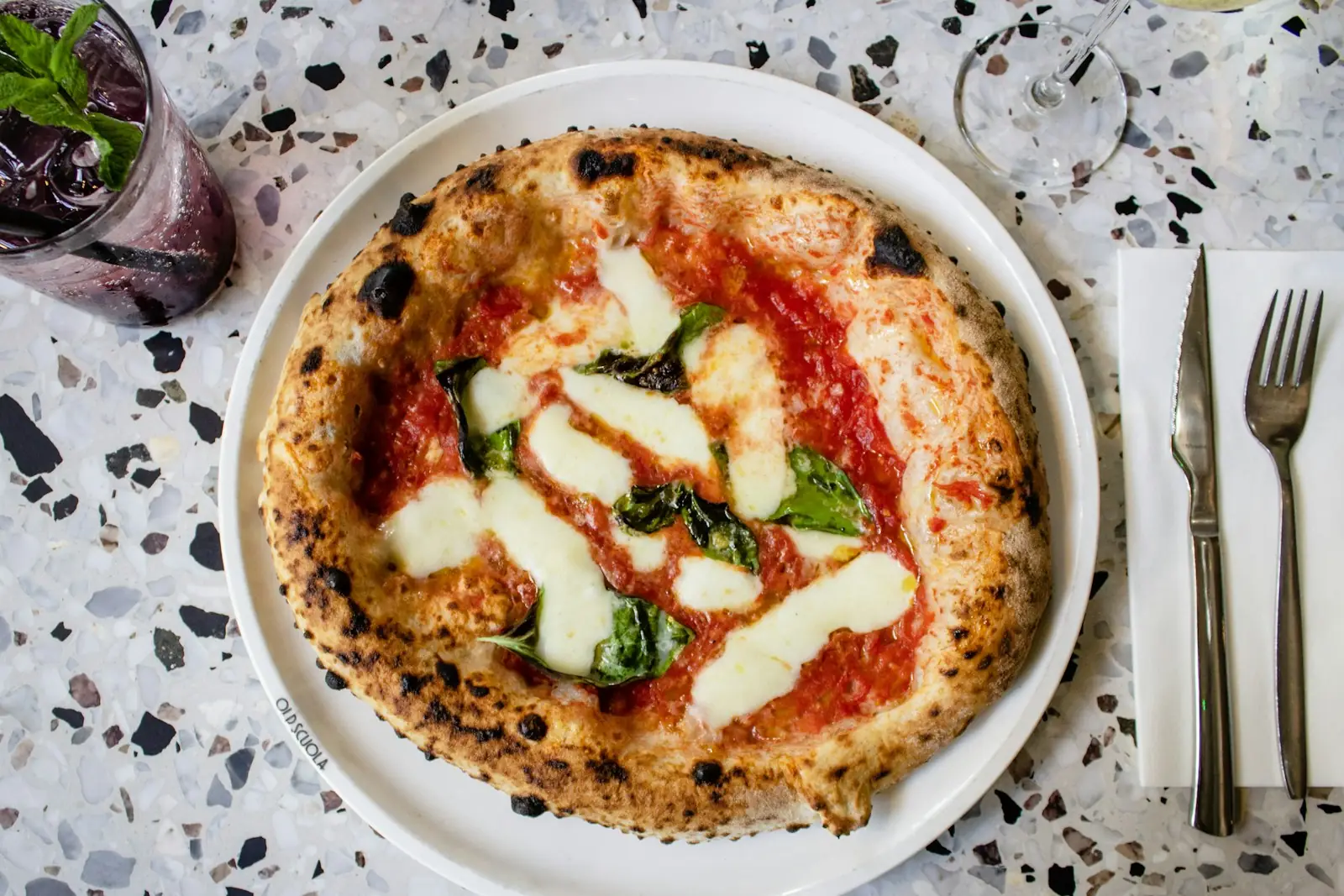
There is something deeply satisfying about pulling your own pizza out of the oven, with a puffy, blistered crust and pools of melted mozzarella. This homemade Margherita pizza keeps things classic: a simple from-scratch dough, a bright no-cook tomato sauce, fresh mozzarella and a scattering of basil. Few ingredients, lots of flavor.
The secret is not complicated equipment. It is a dough that has had time to rise and a baking surface that is screaming hot. A pizza stone, baking steel or even an upturned heavy sheet pan, preheated well, gives the base a sharp blast of heat so it crisps underneath while the top bubbles.
Most of the time here is hands-off rising, so the active work is easy to fit around your evening. If you are building confidence with yeast, the same patience pays off in many of our baking recipes.
Homemade Margherita pizza at a glance
- Taste and texture: a crisp, chewy, lightly charred crust with tangy tomato, creamy mozzarella and fragrant fresh basil.
- Best for: pizza night at home, weekend family dinners and anyone wanting to try their first yeasted dough.
- Key technique: stretching the dough by hand and baking on a thoroughly preheated stone or steel at the oven’s highest heat.
Why this Margherita pizza works
A simple, forgiving dough
Flour, water, yeast, salt, sugar and olive oil are all the dough needs. Instant yeast mixes straight into the flour, so there is no separate proofing step. The olive oil keeps the dough supple and easy to stretch, and makes the crust tender inside while it crisps on the outside. Bread flour gives a chewier result thanks to its higher protein, but all-purpose flour works well too.
A no-cook tomato sauce
Margherita is all about fresh, clean flavors, so the sauce is simply crushed canned tomatoes with garlic, olive oil and salt. It cooks on the pizza in the oven, keeping its bright, fruity taste. Draining the loose liquid from the can stops the center of the pizza from turning soggy.
Dry, fresh mozzarella
Fresh mozzarella melts into soft, creamy pools, but it holds a lot of water. Tearing it into pieces and patting them dry with paper towels keeps that moisture from flooding the sauce.
Serious heat
Home ovens cannot match a wood-fired oven, but a long preheat helps close the gap. Giving the stone or steel about 45 minutes at 500°F / 260°C stores enough heat to puff and crisp the crust in about 10 minutes.
Classic Homemade Margherita Pizza
Equipment
- Large mixing bowl
- Pizza stone, baking steel or heavy upturned sheet pan
- Pizza peel or flat sheet pan
- Medium bowl
- Clean kitchen towel or plastic wrap
- Pizza cutter or large knife
Ingredients
Pizza dough
- 3 cups all-purpose flour or bread flour 375 g, spooned and leveled, plus extra for dusting
- 2 1/4 teaspoons instant yeast 1 packet, 7 g
- 1 teaspoon granulated sugar
- 1 1/2 teaspoons fine salt 9 g
- 1 cup warm water 240 ml, about 105-110°F / 40-43°C
- 2 tablespoons extra-virgin olive oil plus a little for the bowl
Tomato sauce
- 1 can whole peeled tomatoes 14 oz / 400 g, drained of loose liquid
- 1 clove garlic finely grated
- 1 tablespoon extra-virgin olive oil
- 1/2 teaspoon fine salt
Toppings
- 8 oz fresh mozzarella 225 g, torn into pieces and patted dry
- 12 fresh basil leaves about a small handful
- 1 tablespoon extra-virgin olive oil for drizzling
- 2 tablespoons cornmeal or semolina for dusting the peel
Instructions
Make the dough
- In a large mixing bowl, whisk together the flour, instant yeast, sugar and salt.
- Add the warm water and 2 tablespoons olive oil. Stir with a spoon until a shaggy dough forms and no dry flour remains.
- Turn the dough out onto a lightly floured surface and knead for 8 to 10 minutes, until smooth, elastic and slightly tacky but not sticky. Add a sprinkle of flour only if it sticks badly to your hands.
- Lightly oil the bowl, return the dough to it and turn to coat. Cover with a clean towel or plastic wrap and let it rise in a warm spot for 1 to 1 1/2 hours, until doubled in size.
Prepare the oven and sauce
- About 45 minutes before baking (while the dough is still rising), place a pizza stone, baking steel or upturned heavy sheet pan on a rack in the upper third of the oven and preheat to 500°F / 260°C, or your oven's highest setting.
- Pour the drained tomatoes into a medium bowl and crush them with your hands or a fork until mostly smooth with a few small pieces. Stir in the grated garlic, 1 tablespoon olive oil and 1/2 teaspoon salt.
Shape, top and bake
- Punch down the risen dough gently and divide it into 2 equal pieces. Shape each into a smooth ball.
- On a lightly floured surface, press one ball into a flat disc with your fingertips, leaving a 1/2-inch border thicker for the crust. Stretch it into a 12-inch round by draping it over your knuckles or pressing outward from the center. If it springs back, let it rest for 5 minutes and try again.
- Dust a pizza peel or flat sheet pan with half the cornmeal and lay the dough on it.
- Spread about 1/2 cup of the sauce thinly over the dough, leaving the border bare. Scatter half the mozzarella over the top.
- Give the peel a small shake to make sure the pizza slides, then slide it onto the hot stone. Bake for 10 to 12 minutes, until the crust is deep golden and blistered and the cheese is bubbling with a few browned spots.
- Transfer the pizza to a cutting board. Top with half the basil leaves and drizzle with half the remaining olive oil. Let it rest for 2 minutes, then slice.
- Repeat with the second ball of dough and the remaining cornmeal, sauce, mozzarella, basil and olive oil. Refrigerate any leftover sauce.
Notes
Tips for a better homemade pizza
- Find a warm spot for rising. A draft-free spot on the counter, away from open windows, helps the dough rise steadily (your oven will be busy preheating). In a cool kitchen it may need the full 1 1/2 hours or a little more.
- Stretch, do not roll. A rolling pin presses out the air bubbles that make the crust puffy. Use your fingertips and knuckles, and keep the edge slightly thicker.
- Go light on toppings. A thin layer of sauce and well-spaced cheese bake through properly. An overloaded pizza stays pale and soggy in the middle.
- Build the pizza on the peel quickly. The longer topped dough sits, the more it sticks. Give the peel a gentle shake before sliding to check it moves freely.
- Add basil after baking. Fresh leaves turn black and brittle in a very hot oven. Scatter them on as soon as the pizza comes out so they wilt gently and stay green.
Substitutions and variations
- Low-moisture mozzarella: shredded low-moisture mozzarella browns more and releases less water. It is a good choice if your oven runs cooler.
- Cherry tomatoes: halved cherry tomatoes scattered over the sauce add sweet, juicy bursts.
- Whole wheat: swap up to one-third of the flour for whole wheat flour. Add 1 to 2 tablespoons extra water, as whole wheat absorbs more.
- Dairy-free: plant-based mozzarella-style cheese works, though it melts differently; look for one designed to melt.
- Gluten-free: this particular dough relies on gluten to stretch, so a simple flour swap will not work. Use a dedicated gluten-free pizza dough recipe or mix instead.
- Make-ahead dough: after kneading, refrigerate the oiled, covered dough for up to 2 days. The slow, cold rise deepens the flavor. Let it sit at room temperature for about 1 hour before shaping.
Storage and reheating
Refrigerate leftover pizza within 2 hours, wrapped or in an airtight container, for up to 3 days. Reheat slices in a dry skillet over medium-low heat with a lid on for 4 to 6 minutes, which crisps the base and melts the cheese, or on a sheet pan in a 400°F / 200°C oven for 8 to 10 minutes.
Unbaked dough balls freeze well. Coat them lightly in oil, wrap tightly and freeze for up to 3 months. Thaw overnight in the fridge, then rest at room temperature for about 1 hour before stretching. Leftover tomato sauce keeps in a covered jar in the fridge for up to 5 days.
Common mistakes to avoid
- Using water that is too hot. Very hot water can kill yeast and stop the dough from rising. Aim for warm, around 105 to 110°F / 40 to 43°C.
- Skipping the long preheat. If the stone is not hot enough, the crust stays pale and bready. Preheat for at least 45 minutes.
- Wet mozzarella and runny sauce. Excess moisture makes the center soggy. Drain the tomatoes and pat the cheese dry.
- Fighting springy dough. If the dough keeps shrinking back as you stretch, the gluten needs to relax. Cover it for 5 minutes, then try again.
Frequently asked questions
Can I make Margherita pizza without a pizza stone?
Yes. Preheat a heavy sheet pan upside down in the oven and slide the pizza onto it just as you would a stone. A cast-iron skillet also works for a smaller pizza.
How do I know when the dough has risen enough?
It should roughly double in size and look puffy. Press a floured finger gently into it; if the dent slowly springs back partway, it is ready.
Should I use bread flour or all-purpose flour for pizza?
Both work. Bread flour has more protein and gives a chewier, more structured crust. All-purpose flour makes a slightly softer, more tender crust and is what most kitchens already have.
What makes a pizza a Margherita?
A Margherita is topped with just tomato, mozzarella and fresh basil, finished with olive oil. The red, white and green toppings are simple by design, so good ingredients really show.
Why is my pizza soggy in the middle?
Usually too much sauce, wet cheese or an underheated baking surface. Use a thin layer of drained sauce, pat the mozzarella dry and give the oven a full preheat.
What to serve with homemade pizza
A crisp green salad with a simple vinaigrette is the classic partner for a Margherita. For a heartier spread, add a sheet pan of crispy oven-baked potato wedges or a bowl of creamy tomato soup for dipping crusts.
Finish pizza night with a slice of easy no-bake cheesecake, which you can make in the morning while the oven stays free. For more ideas for the table, browse our vegetarian recipes.